Five-lecture series

Lecture Series on Islamic Psychology

Nafs Center is honored to announce a special five-lecture series with Dr. Francesca Bocca-Aldaqre, focused on spiritual wellness issues impacting our community through the lens of Islamic spiritual well-being and Islamic Psychology.

This series is part of Nafs Center’s mission to promote spiritual wellness by connecting our community with meaningful education, trusted scholarship, and spiritually grounded guidance. Through these lectures, Dr. Francesca will help explore important questions related to emotional struggles, spiritual growth, family and community challenges, and the role of Islamic Psychology in understanding the human being.

Register for Lecture 5
Dr. Francesca Bocca-Aldaqre

Lecture 5

The Entitled Child and the Exhausted Parent: Narcissism in Family Systems

Sat 14 Nov 2026, 7pm MAPS Main Hall

Having established kibr as a clinical reality of the heart, this class turns to one of its most consequential arenas of operation: the family system. The home is where kibr is first cultivated, modelled, and transmitted across generations. We examine how well-intentioned parenting choices systematically train the nafs toward entitlement rather than tawāḍuʿ, and how controlling or shaming family environments produce the opposite but equally disabling profile — outward compliance concealing a wounded and rageful inner life. The tradition’s framework is clear: character is formed in relationship, and it can be deformed in relationship. This class asks what it looks like to take that responsibility seriously, both as a parent and as an adult child examining what was handed to them.

Register for Lecture 5
Lecture 1

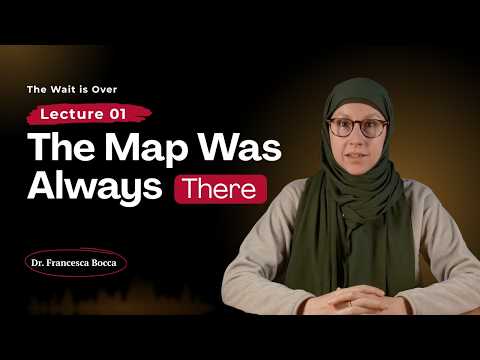
The Map Was Always There: An Introduction to Islamic Psychology

Sat 13 June 2026, 7pm MAPS Main Hall

Most Muslims have heard the words qalb, nafs, and rūḥ their whole lives without ever being told that these are clinical concepts — the foundation of a complete psychological tradition developed by scholars over thirteen centuries. This opening class reintroduces ʿilm al-nafs and suluk not as a spiritual luxury or a self-help trend, but as a sovereign science of the human soul that predates Western psychology by a millennium. Participants leave with a new vocabulary for their inner life and a fundamentally different understanding of what mental health means from within the tradition.

Lecture 2

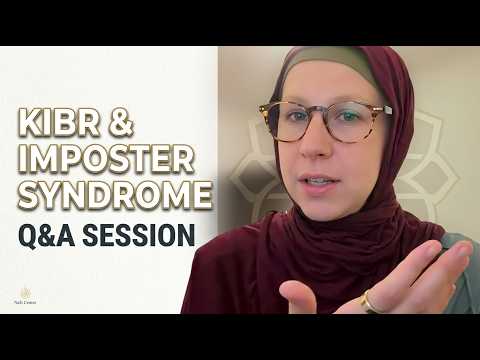
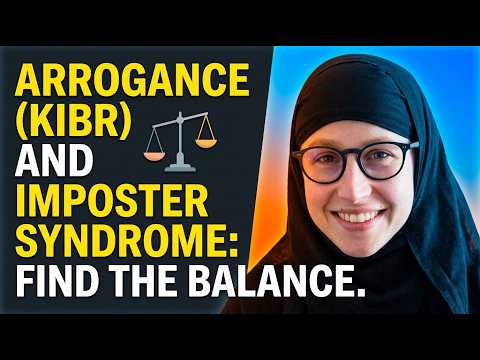
Arrogance (Kibr) and Imposter Syndrome

Sat 25 July 2026, 7pm MAPS Main Hall

Western psychology’s framework for low self-esteem and imposter syndrome – the chronic sense that one is a fraud, that success is undeserved, that exposure is imminent -seems solid at first. But getting deeper, we realise that low self-esteem has more in common with arrogance than we might suspect, it is actually the same root disease in disguise. The Islamic tradition is unambiguous on this point — kibr does not only point upward in obvious self-inflation; it operates just as destructively when the ego fixates on its own inadequacy, monitoring, comparing, and privately insisting on a status it believes it deserves but fears it will never achieve. This class unpacks both the obvious and the hidden faces of kibr using al-Ghazālī’s clinical taxonomy, examines why contemporary self-help culture — with its emphasis on confidence-building and self-affirmation — often deepens the disease it claims to treat, and introduces tawāḍuʿ not as low self-esteem by another name, but as the entirely different inner architecture the tradition prescribes: a heart that has stopped keeping score altogether.

Lecture 3

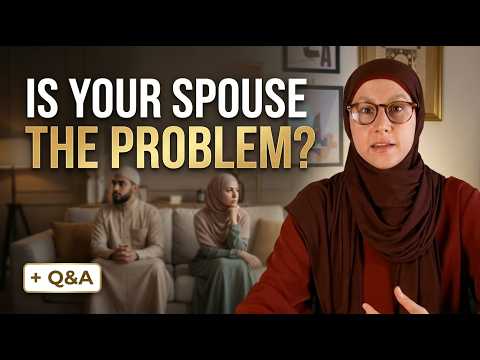
My Husband Is Not My Therapist: The Psychology of Muslim Marriages

Sat 12 Sep 2026 7pm MAPS Main Hall

Muslim couples are expected to fulfill each other’s needs that no two human beings can ever fully meet — and then are blamed individually when the marriage breaks down. This class examines the Islamic understanding of marriage not as a romantic contract between two needs but as a covenant (mīthāq) between two souls, each of which arrives with their own history of heart diseases. We look at the most common patterns of marital breakdown through a classical lens — how kibr operates in conflict, how ḥasad poisons admiration, how fear of vulnerability masquerades as emotional unavailability — and offer a reframe of what it means to do the work of a marriage from within the tradition.

Lecture 4

Screen & Soul: Breaking Free from Digital Addiction

Sat 17 Oct 2026, 6:30pm MAPS Main Hall

Few struggles are as widespread, or as normalised, in our homes and community spaces as our relationship with our screens. This class addresses screen addiction honestly and without shame — because the constant pull of phones, social media, and gaming is quietly costing us our attention, our sleep, our prayer, and our presence with the people we love. Drawing on Ibn al-Qayyim’s analysis of how unchecked desire (hawā) progressively enslaves the nafs, and integrating contemporary neuroscience on attention and reward circuitry, we examine what this compulsion actually is, why willpower alone rarely works, and what a genuine Islamic path to restoring the heart’s attention looks like.